Coffee
Is Frozen Coffee the Secret to Better Flavor and Freshness?
Author:sana
|
Released:March 20, 2026
For most coffee drinkers, the freezer is where leftovers and frozen vegetables go, not their prized specialty beans. Yet over the past decade, freezing both green and roasted coffee has quietly transformed from an industry taboo into a widely adopted practice among top roasters, barista champions, and home enthusiasts alike.
Freezing stops the clock on coffee's aging process. But the execution can be tricky. From cryogenic grinding technology to vacuum-sealed home storage protocols, freezing coffee has evolved into a sophisticated technique backed by serious science. Here is everything you need to know about preserving your coffee's peak flavour without ruining it.
Why Freezing Went From Heresy to Essential
Not long ago, the idea of freezing roasted coffee was widely dismissed. Conventional wisdom said it would introduce moisture, absorb freezer odours, and destroy delicate aromatic oils. Then George Howell started freezing green and roasting coffee back in 2001. In 2017, he served coffees harvested four years prior that tasted as fresh as the day they were frozen. The industry took notice.
Research from the Specialty Coffee Association (SCA) confirmed what Howell had discovered: storing freshly roasted coffee at -25°C (-13°F) significantly slows degassing, the natural release of CO₂ that begins immediately after roasting and steadily degrades flavour over time. By suppressing this process, freezing effectively presses pause on staling.
Today, a growing number of high-end specialty cafés, including ST. ALi, Proud Mary, ONA Coffee, Rosslyn, and George Howell Coffee, have embraced freezing as standard practice. Some maintain "freezer stashes" of limited-release coffees, offering off-menu selections for customers in the know or dedicated reserve menus for curious drinkers.
What Freezing Actually Does to Coffee Beans
At the molecular level, freezing does not stop coffee degradation entirely, but it dramatically slows it. Oxidation, the chemical breakdown of aromatic oils and soluble compounds, continues at a glacial pace when beans are held at sub-zero temperatures.
Moisture poses the biggest risk. Coffee beans are porous and hygroscopic, meaning they readily absorb moisture and odours from the surrounding air. When improperly frozen, condensation forms on bean surfaces, damaging cellular structure and producing flat, woody, or even metallic flavours. Done correctly, however, freezing preserves the volatile compounds responsible for coffee's fruity, floral, and chocolaty notes far longer than room-temperature storage ever could.
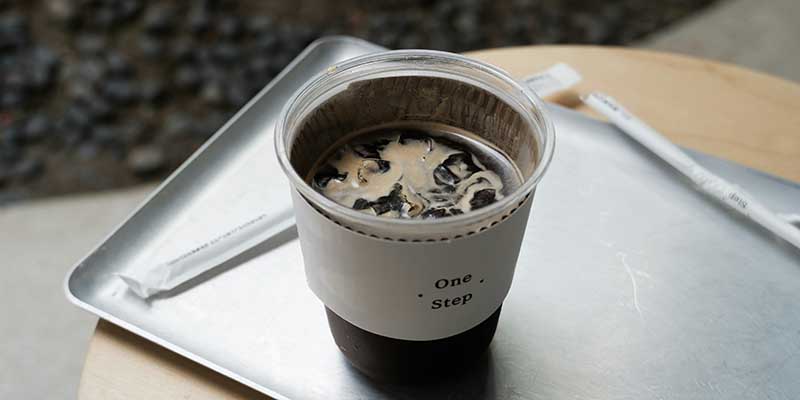
Grinding Frozen: The Performance Advantage
Perhaps the most compelling argument for freezing coffee has nothing to do with long-term storage. It is about what happens inside your grinder.
A 2016 study found that grinding frozen beans produces significantly smaller and more uniform particles compared to room-temperature grinding. The most dramatic change occurred between room temperature and -19°C, where particle size variation dropped by 15-20%.
Why does this matter? Uniform particle size means consistent extraction. Smaller stray particles (known as "fines") over-extract and produce bitterness, while overly large particles under-extract and taste weak or sour. When off-size particles are minimised, the brewed coffee delivers cleaner flavour clarity, higher sweetness, and noticeably less bitterness without changing a single brewing parameter.
Blind taste tests have confirmed these findings. Flavour clarity scores increase by 20-30%, bitterness drops significantly, while sweetness and body remain intact.
The results have not gone unnoticed by professionals. A Barista Magazine report revealed that 72% of World Barista Championship finalists have incorporated frozen bean protocols into their competition routines in recent years. When three-quarters of the world's best baristas adopt a technique, it ceases to be a fad.
Green Coffee Freezing: A Whole Different Conversation
While most discussions focus on roasted beans, freezing green (unroasted) coffee has become increasingly relevant for home roasters and specialty buyers.
A 2024 study investigated sensory changes in frozen green coffee. Three washed coffees from Guatemala, Ethiopia, and Kenya were stored in either Ziploc or vacuum-sealed bags and compared to control samples kept at 20–22°C in standard packaging. The results were surprising. By the end of the project, cuppers generally scored frozen coffees higher than control samples, particularly for coffees with higher initial quality ratings. However, professional tasters were inconsistent in their ability to reliably distinguish frozen from control samples in blind triangulation sets. The researchers concluded that freezing the highest-quality green coffee for long-term storage may offer benefits, but the practice is less beneficial for moderate- to low-scoring specialty arabicas.
Another notable finding: frozen green coffee showed more stable moisture readings over five months compared to control samples, which experienced substantial moisture fluctuation.
For home roasters considering green coffee freezing, the key principles mirror those for roasted beans: divide into single-roast portions before freezing, use vacuum-sealed or airtight containers, and do not repeatedly thaw and refreeze. Green coffee stored at a stable room temperature (18–22°C) with proper humidity control (50-60%) can remain viable for 12-18 months without freezing, so the freezer should be reserved for truly long-term storage scenarios.
The Great Debate: Experts Are Still Divided
Despite growing evidence supporting freezing, not everyone is convinced. Some coffee professionals remain staunch opponents, arguing that freezing introduces more risks than benefits.
Critics point to three main concerns. First, condensation: opening a frozen bag of coffee in a warm, humid environment causes immediate moisture formation on bean surfaces, accelerating degradation rather than preventing it. Second, odour absorption: freezers contain various foods, and coffee readily absorbs surrounding smells, no one wants garlic-scented espresso. Third, the freeze-thaw cycle: repeatedly pulling beans in and out of the freezer creates temperature fluctuations that can fracture bean structure and accelerate oil breakdown.
Even proponents acknowledge these risks. The consensus among freezing advocates is that proper technique determines success or failure. Vacuum sealing, single-dose portioning, and grinding directly from frozen (never thawing first) are non-negotiable requirements.
How to Freeze Coffee Beans Correctly
If you decide to freeze coffee, follow these evidence-based guidelines to maximise flavour preservation and avoid common pitfalls.
Only freeze whole beans. Pre-ground coffee has exponentially more surface area exposed to air and moisture, making it far more susceptible to staleness and odour absorption. Freezing ground coffee is almost never recommended.
Start with fresh beans within their peak window (7–21 days post-roast). Freezing will not improve stale coffee; it only preserves whatever freshness remains at the time of freezing.
Portion into single-use doses immediately before freezing. The ideal portion size matches your typical brew (e.g., 20g–30g). This allows you to remove exactly what you need without exposing the remaining stash to temperature fluctuations and moisture.
Use vacuum-sealed bags or high-quality airtight containers. Professional advice consistently emphasises vacuum sealing as the gold standard. If using resealable freezer bags, remove as much air as possible before sealing. Label each package with the roast date and freeze date.
Freeze only once. Never refreeze thawed coffee. Each freeze-thaw cycle introduces moisture and degrades flavour. Once a portion is removed from the freezer, grind and brew it immediately.
Grind directly from frozen, not thawed first. This is where the magic happens. Frozen beans are more brittle, producing the uniform particle size distribution that enhances extraction. The grinding process generates enough heat to bring the grounds to room temperature for brewing.
Do not store coffee in the refrigerator. Refrigerators cycle between cold and slightly warmer temperatures as compressors turn on and off, creating humidity fluctuations that are far more damaging than stable freezer storage. The refrigerator is the worst possible place for coffee.
Use within three months for optimal flavour. While frozen beans can technically last up to a year or longer, most experts recommend consuming them within three months for best results. After that, gradual flavour degradation becomes noticeable even under ideal storage conditions.

Emerging Trends: Cryogenic Grinding and the Future
At the cutting edge of coffee freezing technology lies cryogenic grinding. Researchers have developed techniques to cool roasted beans to approximately -100°C before grinding, achieving particle uniformity improvements of 15-20% compared to standard freezer temperatures. At such ultra-low temperatures, aromatic oils become so rigid that they cannot escape through micropores during grinding, preserving more flavour compounds in the final brew.
The technology remains largely confined to commercial and industrial applications due to equipment requirements. But as cryogenic cooling systems become more accessible and affordable, retail cryoground coffee could soon appear on supermarket shelves, offering consumers pre-ground coffee that retains the aromatic integrity of freshly ground beans.
When Freezing Makes Sense (And When It Doesn't)
Freezing is not the right choice for every coffee drinker. Consider these scenarios.
Do freeze if: you buy specialty beans in bulk and will not use them within three to four weeks; you want to preserve a rare or limited-edition roast for future enjoyment; you live in a hot, humid climate where room-temperature storage accelerates staling; you are a home roaster storing green coffee for more than six months.
Do not freeze if: you go through a bag of coffee every week or two (just keep it in an opaque, airtight container in a cool, dark cupboard); you lack a vacuum sealer or quality airtight storage; your freezer is prone to temperature fluctuations or contains strongly odorous foods; you are prone to forgetting about beans in the freezer for months on end.
For daily-drinker coffee consumed within two to three weeks of roasting, proper pantry storage (opaque, airtight container away from heat, light, and moisture) remains perfectly adequate. Freezing is a preservation tool for surplus or special coffee, not a necessity for everyday consumption.
From Baristas to Home Brewers: A Practice Worth Adopting
What began as a niche experiment has become mainstream practice across the specialty coffee industry. The convergence of scientific research, competition success, and real-world cafe implementation has validated freezing as a legitimate method for extending coffee's freshness window and improving grind consistency.
A few simple rules make all the difference: vacuum seal, portion into single doses, freeze once, and grind directly from frozen. Follow these, and frozen coffee can taste indistinguishable from, or in some cases better than, its never-frozen counterpart. Ignore them, and you will end up with stale, moisture-damaged, off-tasting coffee that confirms every sceptic's worst fears.
Is Freezing Right for You?
For coffee enthusiasts who buy in bulk, chase rare microlots, or simply want to stock their favourite roast without watching it go stale, freezing is a powerful tool. The science is solid: degassing slows dramatically at sub-zero temperatures, frozen beans grind more uniformly, and proper technique preserves flavour for months.
But freezing demands discipline. Sloppy storage (improper sealing, repeated thawing, grinding after thawing) will degrade quality faster than room-temperature storage ever would.
The decision comes down to your coffee consumption habits and storage capabilities. If you can commit to vacuum-sealing single doses and grinding from frozen, the freezer can become your ally in the pursuit of better coffee. If not, stick with traditional storage methods and buy smaller quantities more frequently.
Either way, the frozen coffee revolution has permanently changed how the industry thinks about freshness. For anyone willing to learn the technique, a world of perfectly preserved, consistently delicious coffee awaits, one frozen bean at a time.
You May Like
-

-
Coffee
Specialty Coffee Trends: Rare Beans, Functional Blends, And Creative Drinks
-
Guide
Coffee Storage Solutions That Keep Beans Fresh Longer
-
Guide
How to Store Coffee Beans for Better Flavor at Home
-
Guide
The Japanese Iced Coffee Method That Gives You Crystal Clear Flavor
-
Guide
Flat White Vs. Latte: The Crucial Difference That Changes Your Order